The attack on marriage is really an attack on the human person, and his dignity, for the devil seeks to pervert our true purpose, to pervert God's holy design. For many of us, we cannot march in protests or write dozens of letters or call numerous times to urge legislators to vote for the Truth. But one thing we can all do is pray and fast. We have designated one day each week to fast for these intentions:

1. That marriage may be preserved, promoted, and understood as God's plan for creation.

2. For all marriages that they may reflect the love of the Trinity.

3. For broken marriages that Christ bring healing and conversion to the spouses' souls.

4. For those who are married, for the sanctification of their marriage and their spouse. For those who are single, for their future spouse and vocation.


Thursday, August 8, 2013

August 9th Fast

+
JMJ
"I also, would like to be a saint but I don't know where to begin.  There's so much to do that I limit myself to the desire.  I often say, "My God, how I would like to be a saint!" Then, I don't do the work! Though it's high time I started. . ." 
(Letter from Bl. Zélie Martin to her daughter Pauline, Feb. 26, 1876)
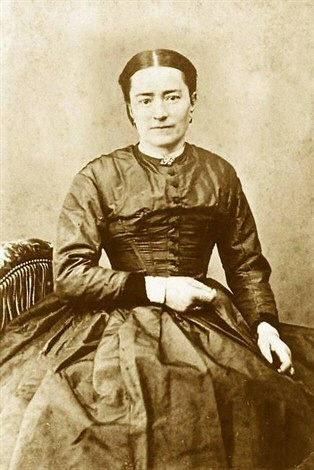
The witnesses of holy people are so necessary to our spiritual formation because their lives reveal the possibility of progress.  Their humility shines forth, and makes them accessible to us in a way that encourages and strengthens our resolve.  In another letter to her daughter Pauline, Blessed Zélie, the mother of St. Thérèse, exemplifies this:
"I want to become a saint, and that won't be easy.  There's a lot of wood to chop and all the wood is as hard as rock.  It would have been better if I tried earlier, while it was less difficult. Oh well, better late than never!"
The struggle for sanctity can be an arduous undertaking.  One becomes discouraged when his efforts to grow in virtue seemingly fail and he thinks it impossible to ever overcome his weaknesses.   How disheartening it can be when he finds himself examining his conscience only to be confessing the same sins over and over again!  And yet, this admission of repeated faults is itself a wonderful sign of the root of all virtues: humility.

God has created us to be perfect, but He did not create us as perfect already, and so in His wonderful mercy, He looks lovingly on us as we strive, in all earnestness, to be good and holy.  He is our Father, and looks on His with a tender love.  He sees the progress we make, the sacrifices we offer, and though we may fall, He is not there to knock us back down, but rather to pick us back up.  He forgives us when we fail, and cherishes us as He sees how hard we try to smooth the rough edges of our souls. When fatigue or anguish prompt us to despair, let us be like St. John at the Last Supper and rest on the bosom of our Lord.  Let us remember that others fought too, and eventually won the victory.  

It is good to remember the Gospel story of the loaves and fishes when we believe our offerings are too meager.  After the Apostles noted that the people should be sent away, Christ replied:
 "They need not go away, you give them something to eat. They said to him,'We have only five loaves and two fish.' and He said to them,'Bring them here to me.' Then he ordered the crowds to sit down on the grass; and taking the five loaves and the two fish he looked up to heaven, and blessed, and broke and gave the loaves to the disciples, and the disciples gave them to the crowds. And they all ate and were satisfied. And they took up twelve baskets full of the broken pieces left over. (Mt. 14:16-18)
Christ worked a miracle, but not of nothing.  Though only God can truly create something out of nothing, our Lord chose to use man's offerings to show His power.  In the same way, God cannot change our lives if we have nothing to offer Him; but through His grace, He can miraculously convert our poor offerings into something noble and resplendent.  God loves us and desires, even more than we do, our eternal happiness; therefore, He is eager to do all He can to help us when our desires coincide with His own.


Thursday, August 1, 2013

August 2nd Fast

+
JMJ

". . . I feel called to the Priesthood and to the Apostolate—I would be a Martyr, a Doctor of the Church. I should like to accomplish the most heroic deeds. . .

My eyes fell on the 12th and 13th chapters of the First Epistle to the Corinthians. I read that all cannot become Apostles, Prophets, and Doctors; that the Church is composed of different members; that the eye cannot also be the hand. The answer was clear, but it did not fulfill my desires, or give to me the peace I sought. . .

Without being discouraged I read on, and found comfort in this counsel: "Be zealous for the better gifts. And I show unto you a yet more excellent way." The Apostle then explains how all perfect gifts are nothing without Love, that Charity is the most excellent way of going surely to God. At last I had found rest. . .
I understood that love embraces all vocations, that it is all things, and that it reaches out through all the ages, and to the uttermost limits of the earth, because it is eternal.  Then, beside myself with joy, I cried out: "O Jesus, my Love, at last I have found my vocation. My vocation is love! "
(St. Thérèse of Lisieux, Story of a Soul)

 In striving to lead a holy life we can often get distracted by the vexing problem of constant comparison.    Whether this leads to pride or jealousy is of no consequence as both are equally damaging to our soul and our vocation.  God has given each man certain graces and gifts, pertaining to his particular calling.  If a man begins to compare his life, it may lead to complacency or despair.  He may feel that he is far above the rest and need not do any more than others in his state in life, or he may give in to despair believing that it is useless to strive for perfection when he falls so short of it, and others seemingly attain it. But less we become disheartened when these most frustrating and natural proposals pop into our mind, we should look to the saints for their witness when comparisons creep into our thoughts.

One of the most beautiful attributes that is apparent in all the saints is their obvious simplicity.  They understood their uniqueness, and therefore accepted their task most readily, knowing it could be done by no one else.  They only compared themselves to others when looking to grow in holiness, and for no other reason.  They were certain of their particular call, and confident in the grace they would receive to fulfill it.

Yet, what led to the peace that resided in the souls of the saints was their great love.  It cannot be overstated that love cloaked their every deed.  They could not bring themselves to jealous or envious thoughts because, as Blessed Mother Teresa said, "all [was] for Jesus."  Whether crosses were given or blessings poured forth, it was no matter, all was done for the love of Christ.  And because they loved Him, they loved all those that He loved: every person they encountered, sinner and saint.  They did not think whether one deserved less or more, for they knew themselves they we all deserve nothing, and yet have been given the chance at the most important thing: eternal happiness.

When we must swat away the distractions that constantly cloud our minds, let us do as St. Francis de Sales suggested and make Acts of Love to God.  Let us rejoice in His blessings for others, let us be grateful for the blessings He has given us, and let us above all love Him in the vocation He has called us to.


Thursday, July 25, 2013

July 26th Fast


+
JMJ

"How beautiful, then, the marriage of two Christians, two who are one in hope, one in desire, one in the way of life they follow, one in the religion they practice. They are as brother and sister, both servants of the same Master. Nothing divides them, either in flesh or in spirit. They are, in very truth, two in one flesh; and where there is but one flesh there is also but one spirit. 
They pray together, they worship together, they fast together; instructing one another, encouraging one another, strengthening one another. Side by side they visit God's church and partake of God's Banquet; side by side they face difficulties and persecution, share their consolations. They have no secrets from one another; they never shun each other's company; they never bring sorrow to each other's hearts. 
Unembarrassed they visit the sick and assist the needy. They give alms without anxiety; they attend the Sacrifice without difficulty; they perform their daily exercises of piety without hindrance. They need not be furtive about making the Sign of the Cross, nor timorous in greeting the brethren, nor silent in asking a blessing of God. Psalms and hymns they sing to one another, striving to see which one of them will chant more beautifully the praises of their Lord. Hearing and seeing this, Christ rejoices. To such as these He gives His peace. Where there are two together, there also He is present; and where He is, there evil is not." 
(Tertullian, Letter to His Wife, ca. 202 A.D.)
The unitive nature of the marital bond brings about its procreative nature in the fullest sense.  A couple's fruitfulness is not based on its biological fecundity, but on their sacramental unity.  A husband and wife stand before God as one on their wedding day, and henceforth they must come to God as one in their prayer, in their sacrifice, in their works of mercy.  Their strength as a couple will ever increase or continually diminish, as they strive for this unity or deviate from the path towards it.

The devil is fully aware of the powerful strength of this bond and so constantly seeks to divide and conquer each spouse on his own.  His ways are so cunning and his deceit so subtle that he easily introduces friction into a marriage.  He encourages spouses to lead separate lives, if not in deed than in thought; ones that are parallel but never intersecting.

Yet this is where our faith is so very vital to the wellbeing of marriages.  God has not only given couples abundant graces, but also abundant opportunity to grow in virtue as a couple together.  Family life offers ample opportunities for a couple to approach our Lord together through prayer, works and sacrifice.  These three things done together lead to an interior unity which is much greater and more fruitful than a physical one.  For we witness from the supernatural unions of the saints with Christ and His Church, that much fruit comes from a marriage that is free from any impediments, any tangential distractions.  The great harvest of souls that the saints produced is witness to the great unity of hearts that was theirs: their heart and His Most Sacred Heart.

How truly tremendous is the vocation of Christian matrimony!  How many more souls can be brought into His kingdom by the fruitful union of the spouses: the souls of children, but just as importantly, the souls of the spouses.  


Friday, July 12, 2013

July 12th Fast

+
JMJ
“When we had our children, our ideas changed somewhat.  Thenceforward we lived only for them; they made all our happiness and we would never have found it save in them.  In fact, nothing any longer cost us anything; the world was no longer a burden to us.  As for me, my children were my great compensation, so that I wished to have many in order to bring them up to heaven.”  (Blessed Zélie Martin, Mother of Saint Thérèse of Lisieux)
What a wonderful vocation marriage is!  So many start out their married lives, or their days in courtship, dreaming of the day when they will being a family of their own, and have the great opportunity and responsibility to guide little hearts to heaven. They hope and pray for the great days to come when God will bless them with these great gifts, and so they can return His love by giving their treasures back to Him.  Yet, in those hopeful dreams, actual children do not exist, and daily doldrum is never present.  When children do come, the tediousness and business of the daily routine can unfortunately subdue our early rigor.  We focus on surviving each day, rather than living it for God.  The world and its affairs become a burden, and our fears and anxieties crowd out our hopes and faith-filled desires.

It is necessary to recover our former fervor, for the task that lies before married couples is a great one.  A marathon is not won in the first few miles, nor in the last, but the greatest runners win because they maintain a steady pace throughout.  Difficulties arise in marriage, unforeseen events affect family life, but one thing must remain constant: that of bringing each soul to heaven.  This is what must guide our thoughts, drive our actions, cloak the manner in which we interact with our family members.

To maintain this zeal, we must ourselves be filled with the hope of heaven.  This is impossible without prayer, and sacrifice.  Constant prayer must be a daily companion lest love grow cold and weak. Speaking with Him who is Love, confiding in Him, seeking comfort in Him will surely help us bring that Love to those we love.  The gold of our love is refined in the fire of sacrifice.  Perpetual sacrifice complements our prayers, and invigorates our zeal. 

Today, let us recall again the beautiful calling God has blessed us with, and pray for the gift of perseverance and patience as we live it out.


Friday, July 5, 2013

July 5th Post

+
JMJ
"Never let evil talk pass your lips; say only the good things men need to hear, things that will really help them.  Do nothing that will sadden the Holy Spirit with whom you were sealed against the day of redemption.  Get rid of all bitterness, passion and anger, harsh words, slander, and malice of every kind.  In place of these, be kind to another, compassionate, and mutually forgiving, just as God has forgiven you in Christ."
(Ephesians 4: 29-32)
Christ said, "Blessed are the merciful for they shall be shown mercy."  It can be much easier to show mercy to our neighbors and friends at times, then to our own family members.  We can easily forgive others' faults, and make excuses for their behavior, but when it comes to a spouse or a child, or a sibling or a parent, we stubbornly dig in and refuse the same concessions that we previously gave others.  We think they should know better, or that they realize the hurt they cause each time they perform some callous action or say some insensitive word.  We allow resentment to build and believe that because it does not come to the fore we are not being sinful or causing damage to the relationship.  Or worse still, we allow it to burst out into the open and wound deeply the person we love.

Ecclesiastes says, "Be not quick to anger, for anger lodges in the bosom of fools."  Why do we allow resentment to build up?  Why do we embrace wounds and allow ourselves to feel victimized by others' arrows?  Why is it easier to accept humiliations and hurts by those we barely know and yet feel the pain more deeply by those we love?  It is the same for Christ, our Lord.  When we feel anger begin to perfume our soul with it poisonous fumes, we should think of Him who wept in the garden for us, whose tears flowed especially at the thought of those who said they loved Him but wounded Him still.  We recall His words to St. Margaret Mary:
"Behold the Heart which has so loved men that it has spared nothing, even to exhausting and consuming Itself, in order to testify Its love; and in return, I receive from the greater part only ingratitude, by their irreverence and sacrilege, and by the coldness and contempt they have for Me in this Sacrament of Love. But what I feel most keenly is that it is hearts which are consecrated to Me, that treat Me thus."  
It is very difficult to truly to forgive without holding resentment, without holding a memory of the hurt that was received.  But it is our call us Christians to do so, and it is vital if peace and unity are live in  the family. 
 " Then Peter came up and said to him, 'Lord, how often shall my brother sin against me, and I forgive him? As many as seven times?' Jesus said to him, 'I do not say to you seven times, but seventy times seven.' " (Mt. 18:21-22)
 Let us not only resolve to truly to forgive our family members' offenses, but also to be especially on guard not to cause any ourselves.  Finally, let us look to our Lord who suffers on the Cross, who hangs out of so deep a love for us.  Let us not wound Him, but comfort Him, be with Him there, and so be with Him in eternity.